⏱ 4 min read

Self-custody means **you** hold the private keys to your bitcoin — not a bank, not an exchange, not a company. You are your own bank.

Self-Custody Basics
0 / 3
1
Step 1 / 3

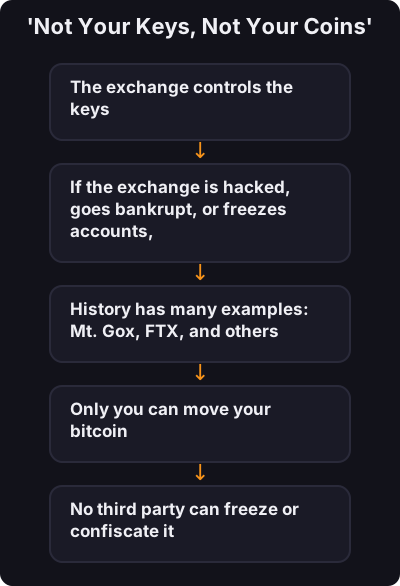
"Not Your Keys, Not Your Coins"

"Not Your Keys, Not Your Coins"

When you keep bitcoin on an exchange:

  • The exchange controls the keys
  • If the exchange is hacked, goes bankrupt, or freezes accounts, you may lose access
  • History has many examples: Mt. Gox, FTX, and others

When you self-custody:

  • Only you can move your bitcoin
  • No third party can freeze or confiscate it
  • You bear full responsibility for security
2
Step 2 / 3

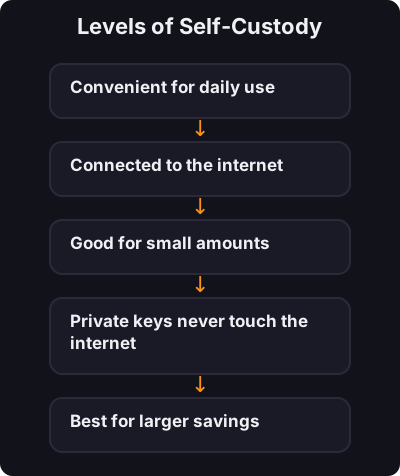
Levels of Self-Custody

Levels of Self-Custody

Hot Wallet (Phone/App)

  • Convenient for daily use
  • Connected to the internet
  • Good for small amounts

Hardware Wallet (Cold Storage)

  • Private keys never touch the internet
  • Best for larger savings
  • Popular options: BitBox, Jade, Coldcard, Ledger (research each before buying)

Multisig (Advanced)

  • Requires multiple keys to spend
  • Highest security for large holdings
  • Covered in future advanced tutorials
3
Step 3 / 3

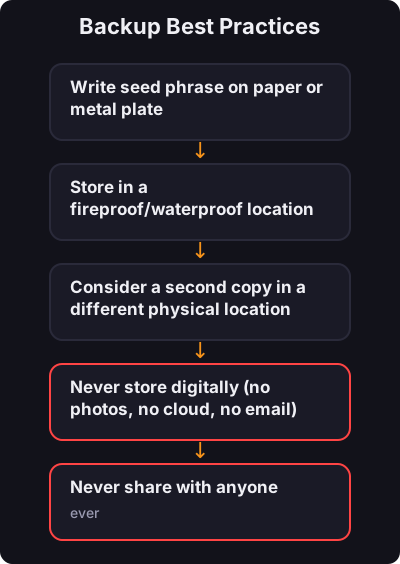
Backup Best Practices

Backup Best Practices
  1. Write seed phrase on paper or metal plate
  2. Store in a fireproof/waterproof location
  3. Consider a second copy in a different physical location
  4. Never store digitally (no photos, no cloud, no email)
  5. Never share with anyone — ever

✅ Key takeaway

Self-custody is the core promise of Bitcoin. Start with a phone wallet, graduate to hardware when your holdings grow, and always protect your seed phrase.

← Back to Tutorials