⏱ 4 min read

Proof-of-work is the engine behind Bitcoin's security. Let's break it down without the math PhD.

Proof of Work Explained
0 / 5
1
Step 1 / 5

The Puzzle

The Puzzle

Miners take a block of transactions and add a random number called a nonce. They hash the whole thing and check: does the result start with enough zeros?

If not → try another nonce. If yes → block found! Broadcast to the network.

This is brute force — trying billions of guesses per second. There's no shortcut.
2
Step 2 / 5

Why It's Hard

Why It's Hard

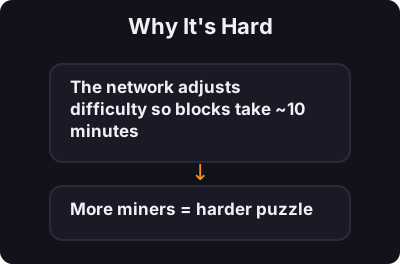
The network adjusts difficulty so blocks take ~10 minutes on average. More miners = harder puzzle. This keeps Bitcoin's schedule steady regardless of how many computers join.

3
Step 3 / 5

Why It Secures Bitcoin

Why It Secures Bitcoin

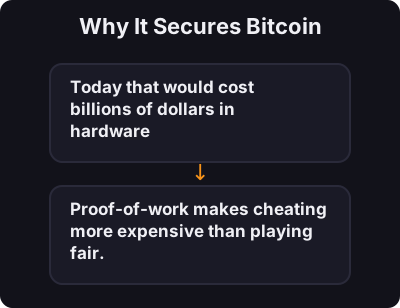
To attack the network (rewrite history), an attacker needs more computing power than all honest miners combined — 51% attack.

Today that would cost billions of dollars in hardware and electricity. Proof-of-work makes cheating more expensive than playing fair.

4
Step 4 / 5

Energy Use — Honest Conversation

Energy Use — Honest Conversation

Yes, mining uses electricity. But consider:

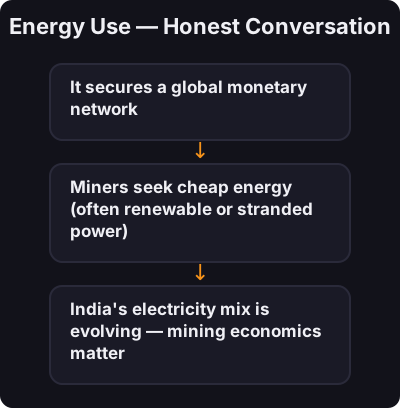
  • It secures a global monetary network
  • Miners seek cheap energy (often renewable or stranded power)
  • India's electricity mix is evolving — mining economics matter locally

Bitcoiners debate energy use openly. Understanding proof-of-work helps you join that conversation intelligently.

5
Step 5 / 5

Proof-of-Work vs Alternatives

Proof-of-Work vs Alternatives

Some cryptocurrencies use proof-of-stake (rich get richer by locking coins). Bitcoin chose proof-of-work because:

  • Proven security for 15+ years
  • No pre-mine or insider advantage
  • Real-world cost to attack

✅ Key takeaway

Proof-of-work is a math lottery that makes attacking Bitcoin enormously expensive. Miners burn electricity to earn the right to add blocks — and that cost is Bitcoin's security.

🎯

Quest Challenge

Answer correctly to earn XP and unlock the next quest.